
Plenary Speakers
Plenary Speaker Ⅰ

Jun Zang
University of Bath, UK
Brief Introduction: Prof. Jun Zang is a Chair Professor of Coastal and Ocean Engineering, Deputy Head of the Department of Architecture and Civil Engineering, at the University of Bath, UK. She led/participated in a number of large national and international research projects related to offshore wind and wave energy development and wave-structure interactions to help accelerate the development of marine renewable energy and improve the resilience and adaptation of coastal areas under extreme wave conditions. Apart from her internal roles at the University of Bath, she is also an associate editor and editorial board member of several journals, and a reviewer or panel member responsible for evaluating research funding applications across multiple countries and regions. She chaired the prestigious 30th International Workshop on Water Waves and Floating Bodies (IWWWFB), the China-UK Bilateral Workshop on Coastal Zone Disaster Early Warning and Mitigation under Extreme Weather, and was the Chair of PRIMaRE (2022-2023), a Partnership of world-class research institutions based in the UK for research in Marine Renewable Energy. She received the UK "Top 50 Women in Engineering" award in 2025.
Speech Title: A Machine Learning-Based Model for Storm Wave Loading on Monopiles
Abstract: This presentation will give a brief overview of the recent advances in storm wave loading on offshore structures with a particular focus on monopiles, typical offshore wind turbine foundations. A Machine Learning-based model will be presented, demonstrating the effectiveness of this physics-informed approach in predicting storm wave loading on monopiles. Building on this model, SeaSwallowsTool, a new open-access tool, was developed and released in 2025. It is the first open-access tool that enables design engineers/researchers to rapidly calculate accurate non-linear wave loading, including extreme wave loading, on monopile foundations within tens of seconds on a standard laptop. The model has been trained on an extensive dataset generated from a large number of carefully controlled laboratory experiments, enabling reliable prediction across a wide range of wave and structural conditions.
The presentation will also discuss and compare the performance of several numerical methods ranging from potential flow solvers to particle methods. Particular attention will be paid to the importance of high-order non-linear wave loading, and the newly developed novel approach and engineering tool for computing these high-order non-linear wave loading components.
Plenary Speaker Ⅱ

Liang Cheng
South China University of Technology, China
Plenary Speaker Ⅲ

Yuxia Hu
University of Western Australia, Australia
Plenary Speaker Ⅳ
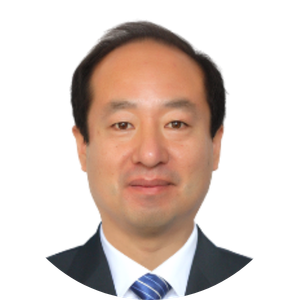
Dezhi Ning
Dalian University of Technology, China